

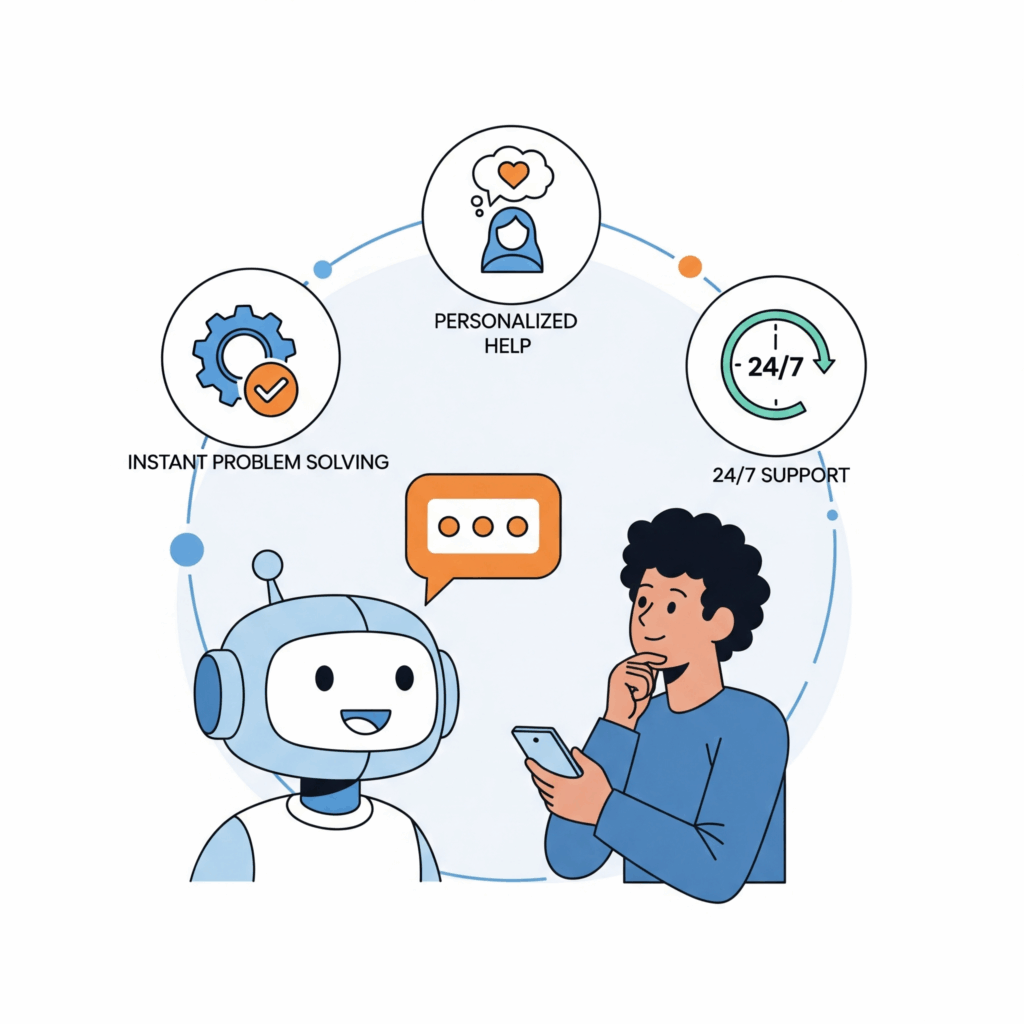
In the digital age, customer service has become the backbone of successful e-commerce businesses. With the rapid growth of online shopping, customers now expect instant, personalized, and seamless support across multiple platforms. This is where AI-powered chatbots have emerged as game-changers, transforming how businesses interact with their customers. Far from being just simple FAQ responders, modern AI chatbots are smart, adaptive, and capable of redefining customer experiences in powerful ways.
The Evolution of Customer Support in E-Commerce
Traditionally, online stores relied on human agents for live chat or call-based support. While effective, these methods often came with challenges such as long wait times, limited availability, and high operational costs. As e-commerce grew globally, customer expectations shifted toward 24/7 availability and quick solutions.
AI chatbots stepped in to fill this gap. Unlike older rule-based bots, today’s advanced AI systems use natural language processing (NLP) and machine learning (ML) to understand context, detect sentiment, and deliver responses that feel human-like. This evolution has made chatbots more than just support tools—they are now central to customer engagement and retention strategies.
Why AI Chatbots Matter in E-Commerce
One of the biggest advantages of AI chatbots is availability. Customers shop across time zones and expect immediate assistance, whether it’s 3 p.m. or 3 a.m. A chatbot never sleeps, providing round-the-clock service without adding to payroll costs.
Another crucial aspect is speed. In e-commerce, a delayed response can mean a lost sale. AI chatbots can answer thousands of queries simultaneously, ensuring customers get the information they need instantly. This not only improves satisfaction but also reduces cart abandonment rates—one of the biggest challenges online retailers face.
Personalization at Scale
One of the most powerful features of AI chatbots is their ability to personalize interactions. By analyzing past purchases, browsing behavior, and preferences, chatbots can recommend products tailored to individual customers. For example, a returning customer searching for sneakers might receive suggestions based on their favorite brands or price ranges.
This kind of personalized guidance mimics the experience of walking into a physical store and being assisted by a knowledgeable sales associate. It helps build stronger customer relationships and increases the likelihood of repeat purchases. Essentially, chatbots enable personalized shopping at scale, something human-only teams struggle to achieve.
Reducing Cart Abandonment
Cart abandonment remains a major issue in e-commerce, with rates averaging around 70% globally. Many customers abandon carts due to unanswered questions about shipping, return policies, or product details. AI chatbots play a direct role in reducing this problem by proactively engaging customers during checkout.
For instance, if a shopper hesitates at the payment page, a chatbot can pop up to offer help, apply a discount code, or answer last-minute questions. This real-time intervention often convinces customers to complete their purchases, directly boosting revenue.
Seamless Multichannel Support
Today’s shoppers don’t just stick to websites—they interact with brands through social media, messaging apps, and mobile apps. AI chatbots integrate seamlessly across these platforms, ensuring consistent support everywhere. Whether a customer messages a store on WhatsApp, Instagram, or directly on the website, the chatbot can provide instant and cohesive responses.
This omnichannel support is critical for building trust and loyalty. Customers feel valued when they get quick assistance on their preferred platforms without having to repeat themselves every time.
Cost Efficiency and Scalability
Hiring and training human customer service teams can be expensive, especially for growing e-commerce businesses. AI chatbots significantly reduce these costs by handling high volumes of repetitive queries—like shipping status, product availability, or return procedures.
At the same time, chatbots free up human agents to focus on complex issues requiring empathy and problem-solving. This combination leads to better efficiency, scalability, and cost savings, allowing businesses to grow without proportionally increasing their support expenses.
Challenges and Limitations
While AI chatbots bring numerous benefits, they are not without challenges. Poorly designed bots can frustrate customers with irrelevant or robotic responses. There’s also the risk of over-reliance, where businesses neglect the need for human support entirely.
To overcome these limitations, businesses must design chatbots with human handoff options. When a query goes beyond the chatbot’s capacity, the system should smoothly transfer the conversation to a live agent. Additionally, continuous training using customer data is essential to improve chatbot performance over time.
The Future of AI Chatbots in E-Commerce
Looking ahead, AI chatbots are set to become even more intelligent and interactive. With advancements in conversational AI, they will better understand emotions, intent, and context, making conversations feel more natural. Integration with voice assistants like Alexa and Google Assistant will further expand their role in shopping experiences.
Additionally, chatbots will likely evolve from being reactive (answering questions) to proactive (anticipating needs). Imagine a chatbot reminding a customer to reorder skincare products before they run out or suggesting new arrivals that align with their past purchases. These predictive features will elevate chatbots from being simple assistants to strategic sales drivers.
Final Thoughts
AI chatbots are no longer optional for e-commerce—they are essential tools for delivering the kind of customer service today’s shoppers demand. From personalized recommendations and reducing cart abandonment to offering 24/7 multichannel support, chatbots are redefining the way businesses connect with their customers.
For e-commerce businesses, investing in a well-designed AI chatbot is more than a tech upgrade—it’s a strategic move toward building trust, loyalty, and long-term growth. The future of online shopping is conversational, and chatbots are leading the way.