


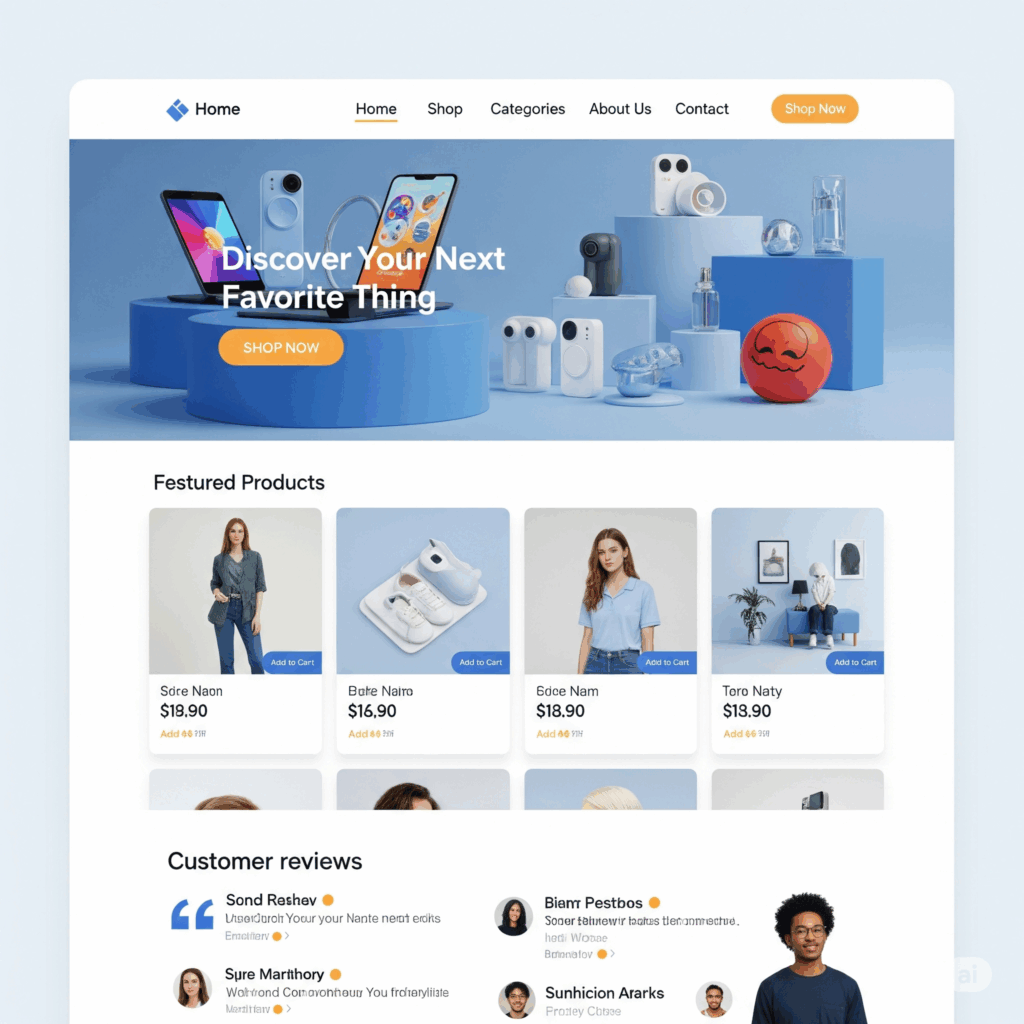
Your e-commerce homepage is the digital storefront of your business. It’s the first impression many potential customers will have of your brand—and as with any first impression, it counts. A great homepage can draw visitors in, guide them to explore more, and ultimately convert them into paying customers. On the other hand, a poorly designed homepage can drive traffic away within seconds.
In this blog, we’ll explore the key elements that make an e-commerce homepage not just good, but great—and how you can optimize yours for conversions, engagement, and brand trust.
1. Clear Value Proposition
When visitors land on your homepage, they should instantly understand what your store is about and why they should shop with you. Your value proposition — the “why” behind your brand — should be front and center. This could be communicated through:
- A powerful headline
- A supporting tagline
- Eye-catching hero imagery or banner
For example, if you sell sustainable fashion, your homepage should immediately communicate this — “Eco-Friendly Fashion for the Conscious Consumer” is more effective than simply saying “Shop Now.”
2. Clean and Intuitive Design
Clutter is the enemy of conversion. A great homepage should have a clean, minimalistic layout that makes it easy for users to navigate. Use white space strategically to create breathing room and highlight key sections.
Important elements such as navigation menus, search bars, and shopping carts should be easily accessible and functional across all devices, especially mobile. An intuitive design ensures that users can quickly find what they’re looking for without feeling overwhelmed.
3. High-Quality Visuals
E-commerce is visual by nature. Without the ability to touch or try products, customers rely heavily on imagery. Your homepage should feature professional, high-resolution images that accurately reflect your brand and products.
Hero images, lifestyle shots, or product highlights on the homepage must look consistent and compelling. Avoid stock photos that feel generic—authentic visuals build trust and help tell your brand story.
4. Strategic Call-to-Actions (CTAs)
Every great homepage guides users towards an action—whether it’s browsing collections, signing up for a newsletter, or starting a purchase. CTAs should be:
- Clear and action-oriented (e.g., “Shop Now,” “Discover the Collection”)
- Visually distinct (with contrasting buttons or styles)
- Strategically placed (above the fold and throughout the page)
Don’t overwhelm your visitors with too many CTAs. Focus on one or two key actions you want them to take and guide them down that path.
5. Easy Navigation and Product Discovery
Visitors should be able to browse your site effortlessly. Include a well-organized menu bar that categorizes your products in a logical structure. Incorporating a dropdown menu or mega menu (for larger stores) can help users explore deeper without confusion.
Add features like:
- A prominent search bar
- Featured categories
- “New Arrivals,” “Best Sellers,” or “On Sale” sections
Making product discovery easy directly influences how quickly and often users convert.
6. Trust-Building Elements
First-time visitors need reassurance before making a purchase. Your homepage should include trust signals that build credibility. These can include:
- Customer testimonials or reviews
- Press mentions or badges (e.g., “Featured in Vogue”)
- Secure checkout icons
- Return policy highlights
- Social proof (e.g., number of happy customers)
If you have user-generated content (UGC) like Instagram posts from customers, feature them. Real-life visuals and positive experiences create a sense of authenticity that modern shoppers crave.
7. Responsive and Fast-Loading
Speed and mobile responsiveness are non-negotiable. A slow-loading homepage increases bounce rates and can cost you sales. Ensure that your homepage is optimized for fast loading times and performs well across all screen sizes.
Mobile commerce now accounts for more than half of online sales globally, so a great homepage must be mobile-first in both design and functionality.
8. Personalization and Dynamic Content
Modern e-commerce homepages often go beyond static design. Incorporating personalized content — such as browsing history-based recommendations, location-based promotions, or tailored messages — can significantly improve user engagement.
Dynamic elements like countdown timers for flash sales, pop-ups for first-time visitor offers, or limited-time discounts can also add excitement and urgency to the shopping experience.
9. Search Engine Optimization (SEO) Basics
A homepage that performs well in search results helps attract organic traffic. Even though most SEO work happens on product and category pages, your homepage should include:
- Proper title tags and meta descriptions
- Alt text for images
- Internal linking to popular collections
- Fast page speed and mobile optimization (as mentioned earlier)
A search-optimized homepage ensures visibility and discoverability in a competitive e-commerce landscape.
10. Consistent Branding
Lastly, your homepage should reflect the heart of your brand. From fonts and color schemes to tone of voice and imagery, brand consistency helps you stand out and builds trust. Visitors should instantly feel your brand’s vibe — whether it’s luxury, eco-conscious, playful, or minimalistic.
Make sure your logo, tagline, and design elements reinforce a cohesive brand identity across the homepage and entire website.
Final Thoughts
Your e-commerce homepage is more than just a digital front door — it’s a sales assistant, a brand ambassador, and often the deciding factor in whether a visitor becomes a customer. By combining aesthetics with functionality, trust-building elements, and strategic design, you can create a homepage that drives conversions and strengthens your brand presence.
Whether you’re launching a new store or revamping an existing one, take time to evaluate your homepage from a user’s perspective. What do they see? How do they feel? What action are they encouraged to take? The answers to these questions will guide you in creating a truly great e-commerce homepage.