

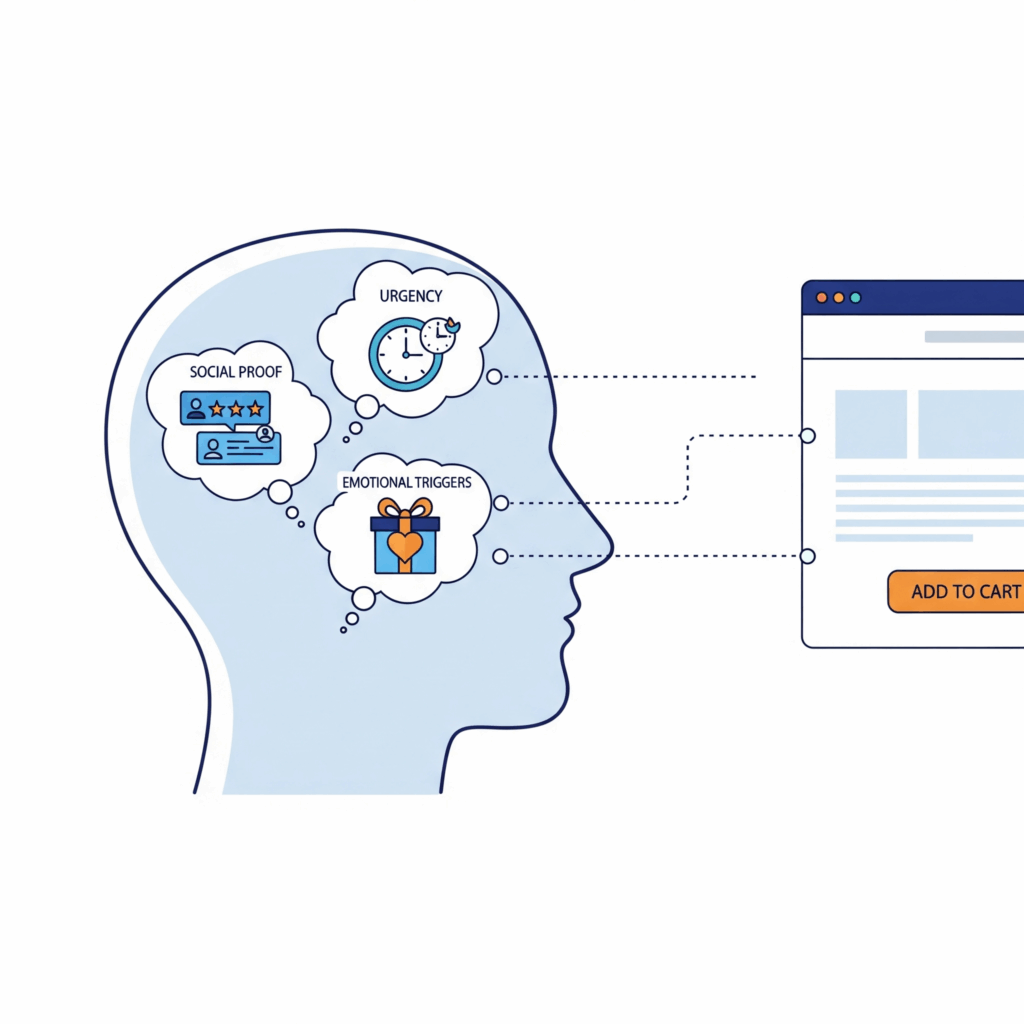
In today’s digital age, shopping is no longer just about finding a product—it’s about how customers feel during the buying process. Successful e-commerce businesses understand that purchasing decisions are heavily influenced by human psychology. From product presentation to pricing strategies, subtle psychological triggers can determine whether a shopper clicks “Buy Now” or abandons their cart.
In this blog, we’ll explore the key psychological factors that drive e-commerce buying decisions and how brands can leverage them to increase conversions.
1. The Power of Social Proof
Humans are social creatures. When faced with uncertainty, we look to others for cues on how to act. In e-commerce, this manifests as social proof—seeing others purchase, use, or recommend a product makes it more appealing.
Customer reviews, ratings, testimonials, and user-generated content (UGC) act as powerful influencers. When a shopper sees hundreds of positive reviews or real-life photos of customers enjoying a product, they are more likely to trust the brand and complete the purchase. Limited-time pop-ups showing “X people are viewing this item” or “Y just purchased” can also create urgency and validation simultaneously.
2. Anchoring Effect in Pricing
The anchoring effect refers to our tendency to rely heavily on the first piece of information we encounter when making decisions. In e-commerce, this is often used in pricing strategies.
For example, if a product originally priced at ₹4,999 is discounted to ₹2,999, shoppers perceive it as a great deal—not just because of the absolute price, but because the “anchor” price sets a higher value in their minds. This technique works especially well during sales and product launches, where the contrast between the original and discounted price is clearly highlighted.
3. The Scarcity Principle
Scarcity is a powerful motivator in decision-making. When people believe an item is in short supply, they perceive it as more valuable and desirable. E-commerce platforms often use phrases like “Only 3 left in stock” or “Offer ends in 2 hours” to tap into this psychological trigger.
This urgency pushes shoppers to act quickly, reducing the time they spend deliberating and lowering the risk of cart abandonment. However, businesses must use scarcity authentically—false urgency can erode trust.
4. Loss Aversion
People are more motivated to avoid losing something than to gain something of equal value. In e-commerce, this principle is leveraged through limited-time offers, free shipping thresholds, and expiring coupon codes.
For example, displaying “Your cart qualifies for free shipping—add ₹200 more” encourages shoppers to add extra items to avoid losing the free shipping benefit. Similarly, “Get 20% off if you order today” prompts action because customers fear missing out on the discount.
5. Cognitive Ease and Simplicity
When a shopping experience feels effortless, customers are more likely to buy. This is known as cognitive ease—our brains prefer options that are simple to process and understand.
A clean website design, clear product descriptions, easy navigation, and a straightforward checkout process all contribute to cognitive ease. Reducing the number of clicks and form fields at checkout can significantly improve conversion rates. In contrast, a confusing layout or too much information can overwhelm shoppers and drive them away.
6. Emotional Triggers
Purchases are often emotional before they are logical. Whether it’s the excitement of owning something new, the joy of gifting, or the comfort of solving a problem, emotions play a central role in buying decisions.
E-commerce brands can tap into these emotions through storytelling, imagery, and brand voice. For example, a skincare brand might share transformation stories with before-and-after photos, evoking feelings of confidence and self-care. Similarly, holiday campaigns that focus on family and togetherness create emotional connections that drive purchases.
7. Reciprocity Principle
The reciprocity principle suggests that people feel compelled to return favors. In e-commerce, offering something valuable upfront—such as free resources, discount codes, or product samples—can encourage shoppers to reciprocate by making a purchase.
Brands often use free guides, exclusive tips, or small gifts with purchase to build goodwill. Over time, these gestures foster loyalty and turn one-time buyers into repeat customers.
8. Choice Overload
While having options is good, too many choices can overwhelm shoppers and lead to decision paralysis. This is known as choice overload. E-commerce businesses can combat this by curating product selections, using filters, and highlighting “best-seller” or “recommended” items to guide shoppers toward a decision.
Highlighting a few top-selling or highly rated products simplifies decision-making and keeps customers from feeling overwhelmed by too many alternatives.
9. Trust and Security Cues
Buying online requires trust, especially when customers share personal and payment information. Displaying trust badges, secure payment icons, and clear return policies reassures shoppers that their purchase is safe.
Positive reviews, transparent shipping information, and visible customer support options further enhance trust. Without these cues, even the most attractive products may struggle to convert.
10. The Endowment Effect
The endowment effect occurs when people place higher value on items they already own—or feel they own. In e-commerce, offering free trials, “preview” features, or interactive product customizers can create a sense of ownership before purchase, making shoppers more likely to buy.
For example, letting customers virtually try on clothes or customize a product with their name gives them a sense of connection and increases the likelihood of completing the transaction.
Final Thoughts
Understanding the psychology behind e-commerce buying decisions isn’t about manipulating customers—it’s about creating a shopping experience that aligns with their natural behaviors, needs, and emotions. By leveraging principles like social proof, scarcity, cognitive ease, and emotional triggers, businesses can build trust, reduce hesitation, and encourage more purchases.
The most successful e-commerce brands blend these psychological insights with genuine value and excellent service. When done right, it’s a win-win: customers enjoy a smooth, satisfying shopping experience, and businesses see stronger loyalty and higher sales.