


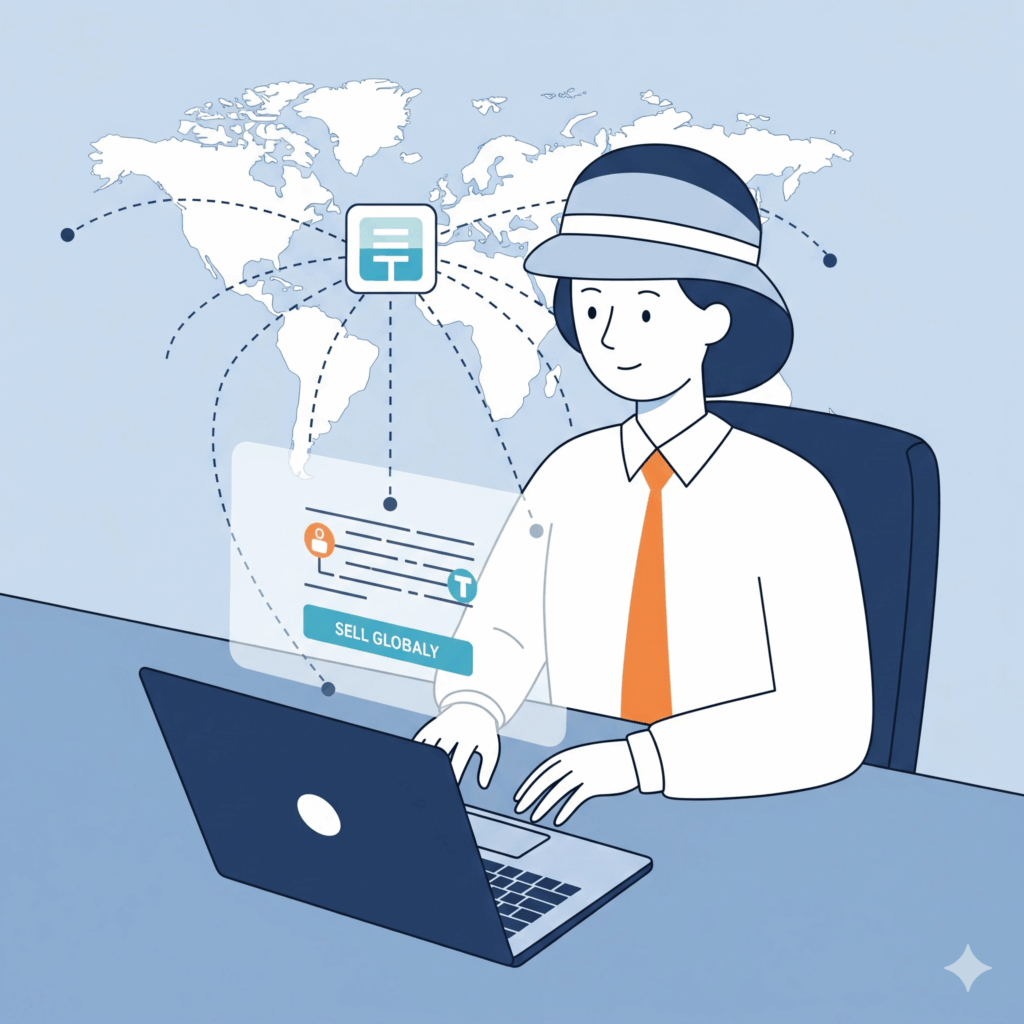
The digital age has erased many of the boundaries that once kept small businesses confined to local markets. Today, even the smallest retailer has the potential to sell products to customers across the globe. This opportunity is driven by cross-border e-commerce—a rapidly growing segment of online retail that enables small businesses to reach international buyers directly. However, going global comes with its own challenges. From shipping logistics to payment systems, the process can seem overwhelming. The good news is that with the right strategies and tools, small businesses can simplify cross-border e-commerce and expand into international markets more seamlessly than ever before.
Why Cross-Border E-Commerce Matters
Cross-border e-commerce is no longer just a trend; it’s a necessity for ambitious small businesses. Studies show that global e-commerce sales are projected to exceed $6 trillion in 2025, with a significant portion coming from international transactions. Customers worldwide are increasingly shopping across borders to access better prices, unique products, or brands unavailable in their local markets.
For small businesses, selling internationally not only widens their customer base but also reduces dependency on a single market. If sales slow in one country due to economic or seasonal fluctuations, other markets can balance growth. Moreover, global exposure enhances brand recognition and builds resilience in a competitive environment.
Challenges in Selling Internationally
While the potential is vast, small businesses often face challenges when expanding globally:
- Logistics and Shipping: Handling international deliveries can be complex, involving longer transit times, higher shipping costs, and potential delays at customs.
- Customs and Duties: Navigating import/export laws, tariffs, and tax regulations can be intimidating for small entrepreneurs unfamiliar with global compliance.
- Currency and Payments: Accepting multiple currencies and offering trusted payment methods for international buyers can be tricky.
- Cultural Differences: From product preferences to language barriers, cultural nuances may affect how your brand is perceived abroad.
- Returns and Refunds: Managing reverse logistics for international customers can add another layer of difficulty.
Understanding these hurdles is the first step toward simplifying the process.
Strategies to Simplify Cross-Border E-Commerce
1. Start with Market Research
Before diving into global sales, research your target markets. Identify countries where demand for your products is high and competition is manageable. Look at cultural trends, consumer behavior, and local regulations. For instance, fashion products may do well in Europe, while electronics may have greater traction in Southeast Asia.
2. Choose the Right E-Commerce Platform
Your online store must be capable of handling international orders. Platforms like Simplisell provide built-in features to support cross-border selling, such as multi-currency checkout, integration with global payment providers, and shipping solutions. For small businesses without technical expertise, using an intuitive platform makes scaling internationally far easier.
3. Simplify Shipping and Fulfillment
Partnering with reliable logistics providers is crucial. Many shipping carriers offer international delivery solutions tailored for small businesses. Simplisell, for example, integrates with shipping partners that handle customs forms, duties, and tracking, so you don’t have to manage these complexities manually. Offering transparent shipping rates at checkout also helps build trust with global buyers.
4. Offer Localized Payment Options
International customers expect to pay in their local currency and through familiar payment methods. While credit cards may be common in the U.S., buyers in Europe may prefer PayPal, and in Asia, digital wallets or bank transfers dominate. A platform like Simplisell makes it easy to integrate multiple payment gateways, so customers enjoy a frictionless checkout experience.
5. Address Language and Cultural Barriers
Small businesses can start by localizing their website content for key markets. Even translating product descriptions and checkout pages into the local language can improve conversions. Moreover, being sensitive to cultural differences in product imagery, marketing, and communication style will help your brand resonate with international customers.
6. Simplify Taxes and Compliance
Customs duties, import taxes, and VAT can be complicated, but clarity is key. Displaying landed costs upfront prevents unpleasant surprises for buyers. Some e-commerce platforms automatically calculate duties and taxes at checkout, making it easy for small businesses to remain compliant while keeping customers informed.
The Role of Technology in Simplifying Global Sales
Technology has made it easier than ever for small businesses to enter international markets. From AI-driven analytics that identify the best-performing regions to automated shipping calculators, digital tools eliminate guesswork and reduce manual effort. Simplisell, for instance, is designed with small businesses in mind, offering user-friendly dashboards, integrated global shipping, and real-time order tracking—making international sales more manageable even for first-time sellers.
Additionally, marketing technology can target international customers through localized ads, SEO strategies, and social media campaigns. With data-driven insights, businesses can fine-tune their offerings for different regions without overspending on trial and error.
Building Trust with International Customers
Trust is the foundation of successful cross-border e-commerce. International buyers may hesitate to order from unfamiliar small businesses, so it’s essential to provide reassurances. Display customer reviews, highlight secure payment methods, and offer transparent policies for shipping and returns. Clear communication around delivery timelines and tracking builds confidence. Post-purchase engagement, such as follow-up emails, also strengthens relationships with global buyers and encourages repeat purchases.
Conclusion
Selling internationally is a powerful growth opportunity for small businesses, but it doesn’t have to be overwhelming. By leveraging the right platforms, logistics partners, and technology, entrepreneurs can simplify cross-border e-commerce and expand into global markets with confidence. Tools like Simplisell make it possible to overcome common hurdles—handling multi-currency payments, integrating with shipping providers, and simplifying compliance—so that small businesses can focus on what they do best: delivering great products to happy customers.
In a world where borders are no longer barriers, the question is not if small businesses should sell internationally, but how soon they can start. With the right strategy, the global marketplace is well within reach.