


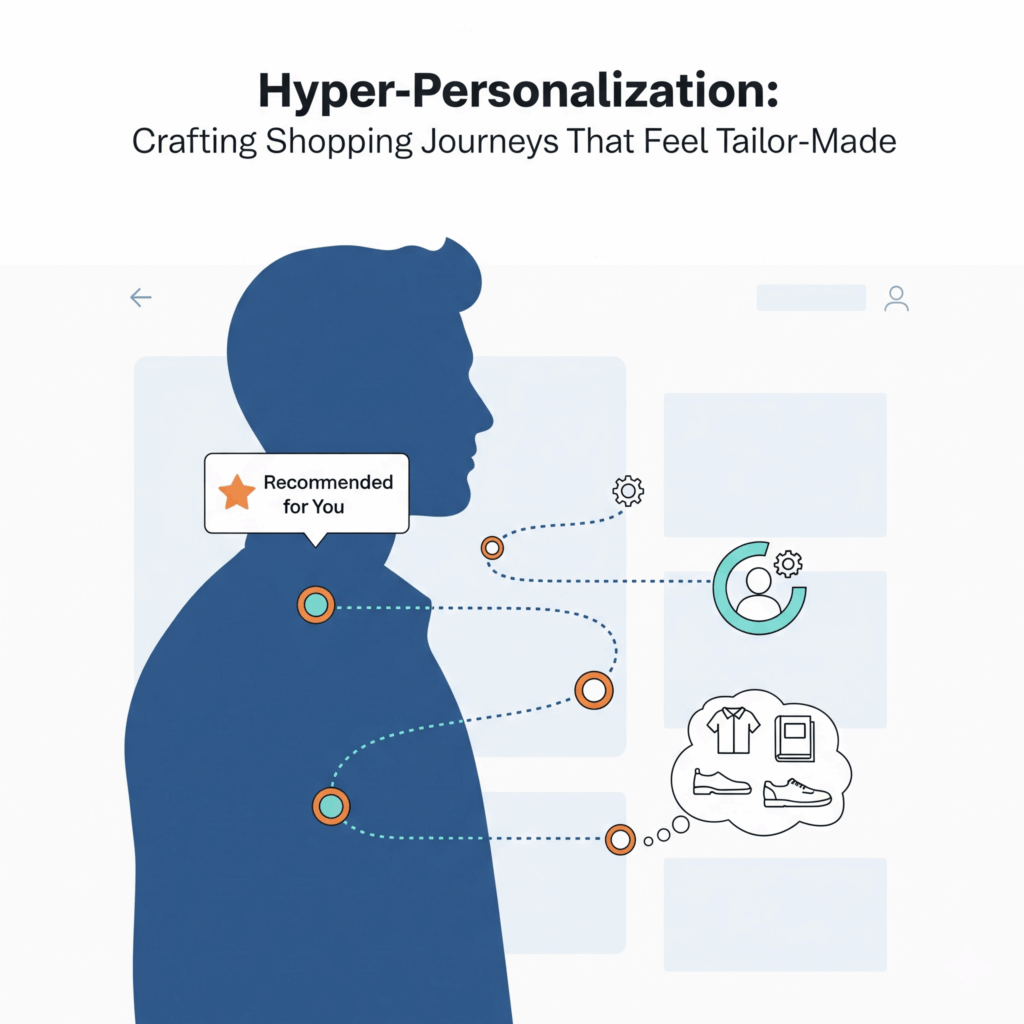
In today’s crowded e-commerce landscape, standing out is no longer about just offering discounts or free shipping. Shoppers now expect experiences that feel uniquely relevant to their preferences, behaviors, and needs. This is where hyper-personalization comes in—a step beyond traditional personalization that uses advanced data analytics, artificial intelligence (AI), and real-time insights to craft shopping journeys that feel tailor-made. For e-commerce businesses, hyper-personalization is not just a trend; it’s fast becoming the future of customer engagement and loyalty.
What Is Hyper-Personalization?
Hyper-personalization goes beyond simply addressing a customer by their name in an email or recommending products based on broad categories. Instead, it leverages real-time behavioral data, purchase history, browsing activity, location, and even predictive analytics to provide highly specific and contextually relevant interactions.
For example, if a customer browses a particular pair of sneakers but doesn’t purchase, hyper-personalization can send them a push notification with a discount code, highlight size availability, or suggest complementary items like sports socks—all at the right moment. It creates a feeling that the brand “knows” the shopper on an individual level.
Why Hyper-Personalization Matters in E-Commerce
Shoppers are more informed and selective than ever. According to industry reports, nearly 80% of consumers are more likely to buy from a brand that provides personalized experiences. But what makes hyper-personalization even more powerful is its ability to build emotional connections.
When customers feel understood, they are more likely to trust the brand and return for repeat purchases. In fact, personalization reduces decision fatigue by narrowing options and guiding buyers toward what suits them best. In an age of information overload, this convenience becomes a major differentiator.
The Technologies Powering Hyper-Personalization
Hyper-personalization relies heavily on cutting-edge tools and technologies:
- Artificial Intelligence (AI) and Machine Learning
AI algorithms can analyze massive amounts of customer data and predict future preferences. This helps brands anticipate what customers may want before they even search for it.
- Real-Time Analytics
Tracking user behavior in real time allows e-commerce platforms to trigger dynamic responses, such as personalized pop-ups, live recommendations, or targeted ads.
- Natural Language Processing (NLP)
With the rise of voice search and chatbots, NLP helps brands understand intent and context, allowing more personalized conversations with customers.
- Customer Data Platforms (CDPs)
These systems unify data from multiple channels—social media, emails, apps, and websites—into one centralized profile, enabling seamless personalization across touchpoints.
Examples of Hyper-Personalization in Action
Hyper-personalization is already shaping the strategies of leading e-commerce giants and innovative startups:
- Amazon: Its recommendation engine accounts for a significant percentage of its sales by tailoring suggestions based on browsing history, past purchases, and what other similar customers have bought.
- Spotify & Netflix: While not traditional e-commerce, their hyper-personalized playlists and recommendations showcase how understanding user preferences keeps engagement levels high.
- Fashion Retailers: Many online clothing brands use virtual fitting rooms powered by AI, suggesting products based on body type, past purchases, and trending styles among similar customer groups.
These examples show that hyper-personalization isn’t just about product suggestions—it’s about creating a seamless journey that feels effortless and relevant.
Key Strategies for Implementing Hyper-Personalization
To truly harness hyper-personalization, businesses need to go beyond surface-level tactics. Here are some strategies to consider:
- Segment Customers on a Micro-Level
Break down audiences not just by demographics but by behaviors—such as browsing time, cart abandonment patterns, and product affinities.
- Leverage Predictive Recommendations
Use AI tools to forecast what a shopper might want next, from fashion to electronics, and deliver proactive suggestions.
- Offer Dynamic Pricing and Promotions
Tailor discounts or offers to individual shoppers. For example, first-time visitors may get a welcome discount, while loyal customers receive exclusive perks.
- Personalize Communication Channels
Ensure that emails, push notifications, and ads reflect individual customer needs. A generic newsletter is less impactful than one featuring products a customer recently explored.
- Focus on Post-Purchase Personalization
The journey doesn’t end at checkout. Personalized thank-you emails, recommendations for complementary products, and tailored re-engagement campaigns can nurture loyalty.
Challenges in Hyper-Personalization
While the benefits are undeniable, businesses must navigate certain challenges:
- Data Privacy Concerns: With regulations like GDPR and CCPA, businesses need to balance personalization with ethical data practices. Transparency is key to maintaining customer trust.
- Technology Integration: Many businesses struggle to unify data across platforms. Without a centralized view of the customer, true hyper-personalization becomes difficult.
- Over-Personalization Risks: Too much personalization can feel invasive. The goal should be relevance without crossing into discomfort.
The Future of Hyper-Personalization in E-Commerce
As technology advances, hyper-personalization will only get smarter and more seamless. We’re moving toward an era where AI-powered virtual shopping assistants could anticipate customer needs before they’re expressed. Imagine logging into an online store where the homepage automatically adjusts to your tastes, sizes, and budget preferences, all without any manual input.
In addition, emerging technologies like augmented reality (AR) will further enhance hyper-personalized experiences by letting shoppers “try before they buy” in virtual spaces. This combination of convenience and individuality will set the standard for e-commerce success in the coming years.
Conclusion
Hyper-personalization is redefining how e-commerce brands connect with their audiences. By blending real-time data, AI-driven insights, and customer-centric strategies, businesses can create shopping journeys that feel as if they were designed for each individual shopper. While challenges around privacy and implementation exist, the potential rewards—increased loyalty, higher conversions, and long-term customer relationships—make it a strategy worth investing in.
In a world where customers are overwhelmed with choices, the brands that stand out will be the ones that make every shopper feel seen, understood, and valued. And that is the true power of hyper-personalization in e-commerce.