

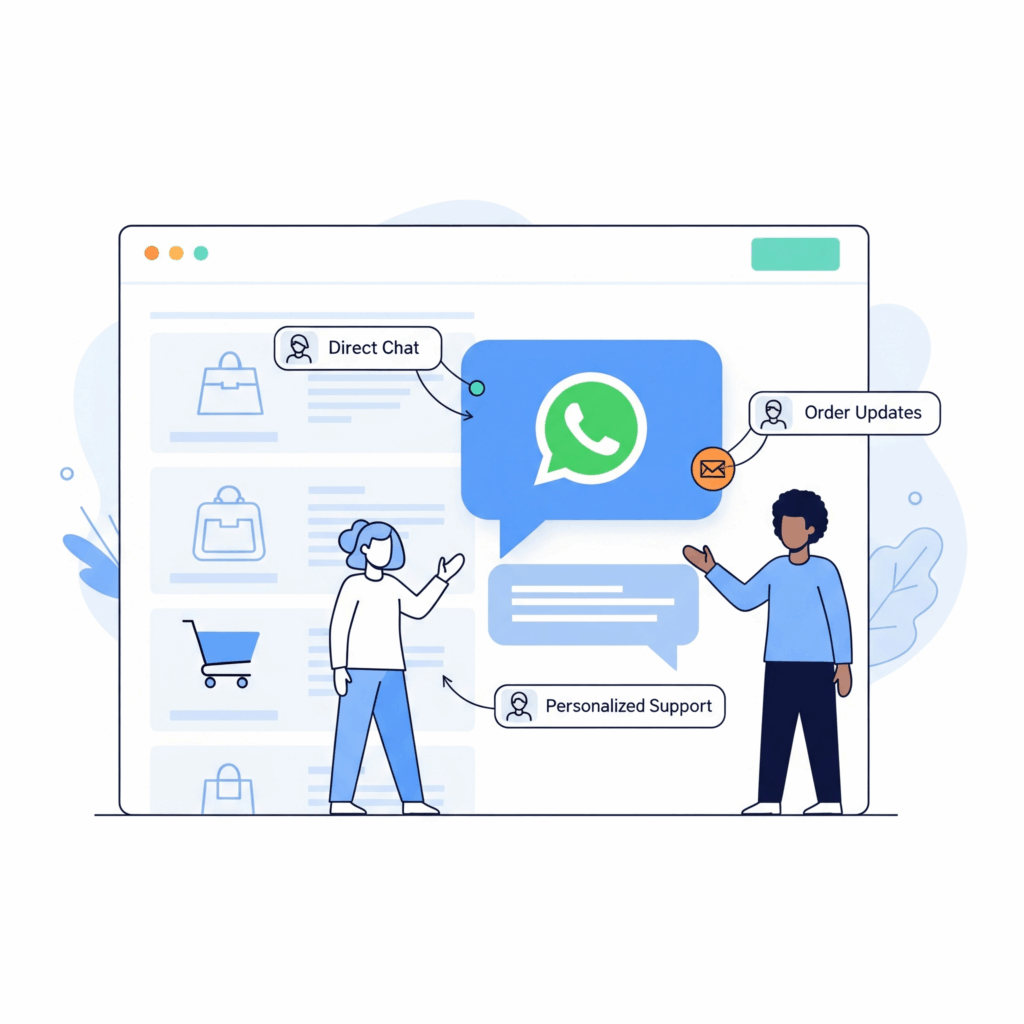
In the evolving world of e-commerce, customer engagement is no longer limited to email marketing and social media ads. Today, brands are increasingly tapping into WhatsApp as a direct, personal, and highly effective communication channel. With over 2 billion users globally and high open rates for messages, WhatsApp offers an unparalleled opportunity for e-commerce businesses to connect with customers, provide instant support, and drive sales.
This blog explores how e-commerce brands can leverage WhatsApp to boost customer engagement, increase conversions, and build long-term loyalty.
Why WhatsApp Is a Game-Changer for E-Commerce
WhatsApp’s popularity stems from its instant, personal, and conversational nature. Unlike emails that may go unread or social media posts that may get lost in the feed, WhatsApp messages are read almost instantly—often within minutes.
Some reasons why it’s ideal for e-commerce:
- High Open Rates: WhatsApp messages have open rates as high as 98%, far higher than most email campaigns.
- Two-Way Communication: Customers can reply instantly, making interactions more engaging and personal.
- Rich Media Support: Brands can send images, videos, catalogs, and even payment links directly in chat.
- Global Reach: It’s widely used in emerging markets where e-commerce is growing rapidly.
1. Provide Real-Time Customer Support
One of WhatsApp’s strongest advantages is instant customer service. Customers no longer want to wait hours or days for email replies; they expect immediate answers.
You can use WhatsApp to:
- Answer pre-purchase questions about products.
- Share product images or videos to help with decision-making.
- Assist with order tracking and delivery updates.
- Handle returns, exchanges, and complaints quickly.
Brands that respond faster not only solve problems but also build trust. A responsive WhatsApp support channel can be a key differentiator for your e-commerce store.
2. Send Personalized Order Updates
Order tracking is one of the most common reasons customers reach out to brands. Instead of directing them to a website tracking page, you can proactively send order updates on WhatsApp.
You can notify customers when:
- Their order is confirmed.
- The item is shipped.
- The delivery is scheduled.
This level of transparency keeps customers informed and reassured, reducing post-purchase anxiety.
3. Share Exclusive Promotions and Offers
WhatsApp is a great platform for exclusive deals because of its direct reach. You can send special discounts, flash sale alerts, or coupon codes to your WhatsApp subscriber list.
To avoid spamming customers:
- Keep promotional messages limited and relevant.
- Use segmentation to send targeted offers based on purchase history.
- Make the offers time-sensitive to encourage quick action.
4. Build Product Awareness Through Rich Content
Unlike SMS, WhatsApp supports rich media, making it ideal for product storytelling. You can send:
- Product catalogs with images, descriptions, and prices.
- Demo videos showing how the product works.
- Testimonials and unboxing videos to build social proof.
For example, a fashion store can share “lookbooks” via WhatsApp to inspire customers with outfit ideas, while a beauty brand can send short makeup tutorials.
5. Automate Engagement with WhatsApp Business API
The WhatsApp Business API allows e-commerce stores to automate customer interactions while keeping them personal. You can:
- Send automated greetings when customers message you.
- Set up quick replies for common questions.
- Use chatbots to guide users to the right products.
Automation is especially useful for handling high volumes of customer queries without compromising on response time.
6. Gather Feedback and Reviews
WhatsApp can also be used to collect customer feedback after a purchase. A short, friendly message asking for a review feels more personal than an email request.
You can:
- Send a simple rating link.
- Ask for product photos or testimonials.
- Encourage customers to share their experience on social media and tag your brand.
This not only improves your customer insights but also generates user-generated content for your marketing.
7. Build Loyalty Programs
Customer retention is as important as acquisition, and WhatsApp can help you run loyalty programs effectively. You can send:
- Points balance updates.
- Special birthday or anniversary offers.
- Invitations to VIP sales or events.
Personalized loyalty messages make customers feel valued and encourage repeat purchases.
Best Practices for WhatsApp E-Commerce Engagement
To get the most out of WhatsApp without overwhelming your customers, keep these tips in mind:
- Get Customer Consent – Always ask for permission before sending promotional messages to comply with privacy laws and avoid spam complaints.
- Be Conversational – Avoid sounding overly corporate; write messages as if speaking directly to a customer.
- Offer Value – Every message should either inform, assist, or delight the customer.
- Respect Timing – Don’t send messages at odd hours; stick to business-friendly times.
- Measure Performance – Track engagement metrics like open rates, click-through rates, and conversions to refine your strategy.
Final Thoughts
WhatsApp is no longer just a personal messaging app—it’s a powerful tool for e-commerce customer engagement. From providing instant support to sharing exclusive promotions and gathering feedback, WhatsApp allows brands to connect with customers in a direct, personalized, and impactful way.
For small businesses, tools like Simplisell make integrating WhatsApp into your e-commerce store easy, enabling you to send updates, handle customer queries, and even share catalogs seamlessly. By combining WhatsApp’s reach with a smart engagement strategy, you can build stronger customer relationships and boost sales in today’s competitive e-commerce market.