

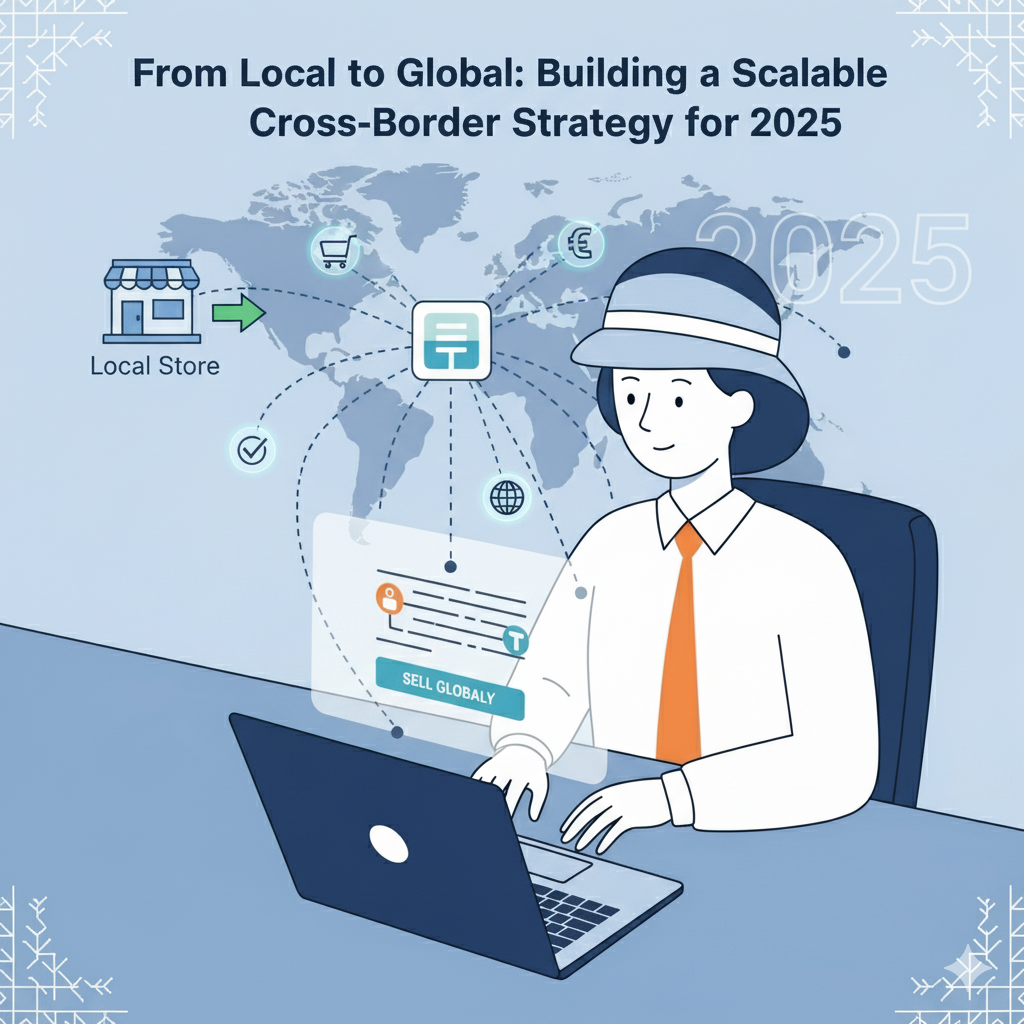
In the digital era, the world has become one big marketplace. The rise of e-commerce has erased geographical boundaries, allowing even small businesses to reach customers thousands of miles away. As we enter 2025, cross-border e-commerce isn’t just a growth strategy — it’s a business necessity. With global online sales projected to exceed $8 trillion by 2030, brands that fail to expand internationally risk being left behind.
But going global doesn’t mean simply shipping products abroad. It’s about creating a scalable cross-border strategy — one that balances growth, localization, and efficiency. Let’s explore how businesses can transform from local players into global brands and how platforms like Simplisell can make this journey seamless.
Understanding Cross-Border E-Commerce
Cross-border e-commerce refers to selling goods or services to consumers outside your home country through online channels. The demand for international products has surged due to global connectivity, mobile adoption, and rising trust in digital transactions.
In 2025, customers expect more than just accessibility — they expect localized experiences, fast delivery, and transparent pricing. To succeed, businesses must integrate global thinking with local understanding.
Platforms like Simplisell empower businesses to manage cross-border selling efficiently — handling payments, logistics, and localization all from one unified dashboard.
Step 1: Research and Choose the Right Markets
The first step toward global expansion is identifying the right markets. Not every country will suit your product or business model.
Use analytics and data-driven insights to answer critical questions:
- Where is the demand for your product type increasing?
- What are the spending habits of your target customers?
- Who are your competitors, and how are they performing in that region?
For instance, a skincare brand from India might find strong demand in the Middle East or Southeast Asia, where natural beauty products are trending. Similarly, sustainable fashion brands might perform better in Europe, where eco-conscious shopping is growing.
Simplisell provides detailed analytics that help businesses spot emerging markets and tailor strategies to fit their goals — ensuring data, not guesswork, drives expansion.
Step 2: Simplify Payments and Currencies
One of the main friction points in global e-commerce is payments. Customers prefer paying in their local currency using familiar gateways. A shopper in Germany might prefer PayPal or Sofort, while one in India might use UPI or credit cards.
Simplisell’s integrated multi-currency and multi-payment gateway system ensures customers across regions can make secure payments easily. Supporting local currencies improves trust and reduces cart abandonment rates.
Moreover, by automatically managing exchange rates and tax calculations, Simplisell removes one of the biggest headaches of going international — financial complexity.
Step 3: Localize Content and Marketing
Global success requires local relevance. Translation is not enough; you must localize your brand’s content to align with cultural nuances and buying behaviors.
Here’s how you can achieve that:
- Language Adaptation: Translate not just product descriptions, but also tone, idioms, and imagery to reflect local preferences.
- Localized SEO: Optimize keywords based on regional search behavior.
- Festive and Cultural Campaigns: Align promotions with local holidays — for example, Diwali in India, Singles’ Day in China, or Black Friday in the U.S.
Simplisell supports localization tools that help brands easily manage language, pricing, and promotions for different regions — ensuring customers everywhere feel like the brand is made for them.
Step 4: Optimize Logistics and Shipping
Fast, reliable delivery can make or break your international reputation. Customers expect transparency — they want to know shipping costs, delivery times, and return policies before purchasing.
Simplisell integrates with global logistics providers to offer real-time shipping tracking, cost optimization, and automated order management. It also simplifies return processes, ensuring customers can shop with confidence.
When you streamline shipping, you don’t just move products efficiently — you build trust and encourage repeat purchases.
Step 5: Comply with Taxes and Trade Regulations
Every country has its own set of import/export rules, tax systems, and duties. Failure to comply can lead to delays, fines, or lost shipments.
Simplisell automates tax calculations and manages region-specific regulations. From VAT handling in Europe to GST compliance in India, the platform ensures every order aligns with local laws. This automation frees businesses from complex paperwork and reduces the risk of costly mistakes.
Step 6: Use Data to Scale Smartly
Once you’re selling globally, continuous improvement becomes essential. Use analytics to identify which products perform best in specific regions and what marketing strategies yield the highest ROI.
Simplisell provides comprehensive insights on sales, traffic, and engagement across multiple markets. This data-driven approach helps businesses refine their strategies, optimize inventory, and scale intelligently.
For example, if your analytics show that certain products perform better in Australia during summer, you can adjust inventory levels and launch targeted seasonal campaigns in advance.
Step 7: Focus on Customer Experience and Retention
Cross-border expansion doesn’t end after the sale. To build a loyal global customer base, brands must focus on post-purchase engagement.
Simplisell helps businesses create automated workflows for customer communication — from shipping updates to personalized emails and loyalty programs. A seamless, transparent post-purchase experience encourages repeat orders and brand advocacy across borders.
How Simplisell Makes Global Selling Effortless
Simplisell was built with one mission — to make e-commerce simple and scalable for everyone. The platform eliminates the need for technical expertise, giving entrepreneurs and small businesses the tools they need to sell globally within minutes.
Its all-in-one ecosystem covers:
- Website creation and customization
- Multi-currency payments
- Global shipping integrations
- Automated tax handling
- Marketing and analytics dashboards
With Simplisell, businesses can focus on growth while the platform handles the complexities of cross-border commerce.
Conclusion
The global e-commerce landscape is more accessible than ever — but scaling successfully requires strategy, technology, and agility. As 2025 unfolds, the businesses that thrive will be those that understand their markets, localize effectively, and deliver exceptional experiences across borders.
Simplisell empowers you to make that happen. Whether you’re expanding your first product line overseas or scaling into multiple continents, Simplisell’s comprehensive tools make global e-commerce simple, efficient, and profitable.
From local to global — your brand’s next chapter starts with Simplisell.